Showing posts with label Tech – The Next Web. Show all posts

Monday, 22 April 2019

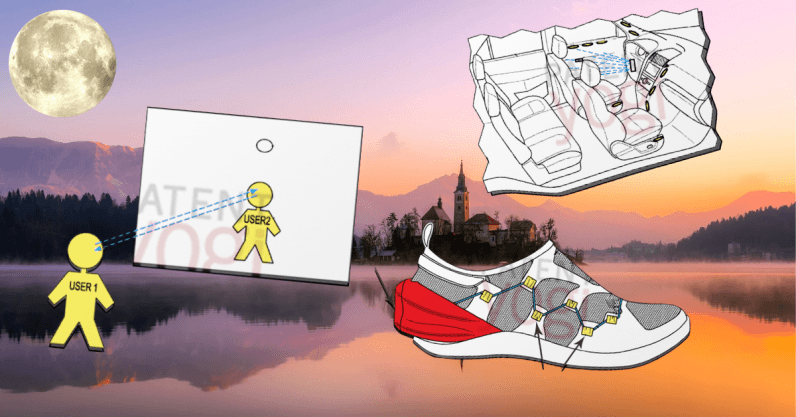
Full moon patents: IBM’s ‘eye contact’ file transfer and Ford’s self-cleaning car


Ugh, the Gregorian calendar is so boring. That’s why we’re disrupting monthly series with a lunar cycle-based series about the best patents of the last synodic month, picked by the PatentYogi team. Get ready when that moon gets gibbous, y’all. This April-ish roundup lands on the cute Pink Moon! Since my last post, the US patent office issued over 29,089 patents and published over 27,807 patent applications. Each patent asset adds a little something new to the human knowledge base. As I cannot list all these patent assets here, the PatentYogi team has selected the five most interesting patent assets. Enjoy! Patent #1.…

This story continues at The Next Web

Sunday, 14 April 2019

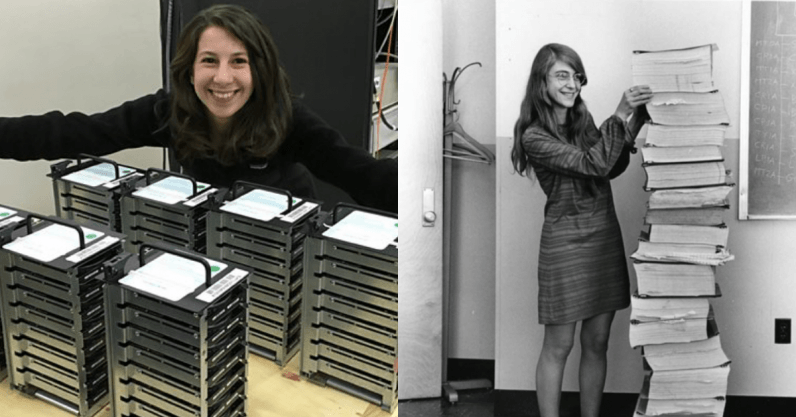
The internet’s idiots are already trying to discredit Katie Bouman’s historic accomplishments


In years to come, April 10 will be remembered as a historic day for humankind, science, and women in STEM. On this day, the first ever image of a celestial phenomenon was published — a black hole — largely thanks to the algorithms created by Katie Bouman. Despite this, the internet is already trying to discredit her revolutionary work. Bouman is a graduate student in computer science and artificial intelligence at the Massachusetts Institute of Technology (MIT), and her research led her research team to create the algorithm. BBC has a nice article about Katie Bouman and Hacker News is….…

This story continues at The Next Web
Alexa, Siri, and Google Assistant are changing how we interact with the world by doing it for us


Innovation shapes our daily experiences, offering us the chance to seize the convenience offered by modern technology. Since the advent of smart speakers and voice-enabled digital assistants, voice-user interface (VUI) technology has experienced an explosion in popularity among consumers and developers alike. VUI grants us convenience—and in our fast-paced modern world, the time saved by VUI is a valuable benefit. A look at online shopping hints at the potential of VUI. E-commerce accounts for hundreds of billions of dollars in sales every year. In 2018, voice search accounted for more than a billion searches every month. A survey of more than 1,500 online…

This story continues at The Next Web

Or just read more coverage about: Google

Baseball stat heads tracked 4M pitches to prove that umpires really are blind


It’s been less than a month since Opening Day. The 2019 Major League Baseball (MLB), like more than a century of professional baseball seasons before it, has already seen its share of controversial calls by the game’s most hated employees: umpires. For the home plate umpire, life can be a bit tricky. He stands inches behind the catcher, zeroing in on another man, the pitcher, standing 60 feet, 6 inches from home plate. In a fraction of a second, he’s responsible for determining whether a pitch traveling at speeds often exceeding one hundred miles per hour lands within an invisible…

This story continues at The Next Web

YouTube’s plan to reward ‘quality’ content has some problems


After a turbulent year, YouTube is allegedly doing some damage control with its advertisers. According to a report from Bloomberg, the company is looking for a way to reward constructive and quality content. The problem is that’s not something that can be done by algorithms. That’s something that’s going to take human eyeballs, looking at every video if the company doesn’t want another scandal. Bloomberg reports the company is testing internal metrics to find videos with good “quality watch time,” which appears to mean videos that aren’t objectionable and don’t contain words or images which might offend the average person. Presumably the…

This story continues at The Next Web

Or just read more coverage about: YouTube

Here’s why Israel’s first moon landing ended in an awesome crash


Israel‘s first attempt at landing an unmanned spacecraft on the Moon today ended in a hard landing after an engine failure caused it to miss its descent window. While it’s unfortunate the craft’s journey ended abruptly, the mission should be lauded as a total success. The craft, named Beresheet (translated: in the beginning), was slated to touch down on the surface of the Moon at approximately 3:25 PM PST, but communications with the vessel were lost upon impact. The Israeli Aerospace Industry’s space division and SpaceIL, the non-profit that sent the craft into space, are currently indicating they presume it to be…

This story continues at The Next Web

You don’t really own the digital books and movies you bought online


Microsoft has announced that it will close the books category of its digital store. While other software and apps will still be available via the virtual shop front, and on purchasers’ consoles and devices, the closure of the eBook store takes with it customers’ eBook libraries. Any digital books bought through the service – even those bought many years ago – will no longer be readable after July 2019. While the company has promised to provide a full refund for all eBook purchases, this decision raises important questions of ownership. Digital products such as eBooks and digital music are often…

This story continues at The Next Web
Erotic feminist film director Erika Lust: Porn, like burgers, shouldn’t be free


Over the last few years, there’s been a rise in feminist porn with more inclusive attitudes about the future of sex positivity, both on- and off-screen. Since the beginning of porn, erotic movies have been predominately made for men, by men, using women as an accessory to masculine sexuality — but Erika Lust, an award-winning Swedish erotic film director, screenwriter, and producer, is working to change the face of the porn industry. With a degree in human rights, political science, and feminism in her back pocket, Lust has played an instrumental role in defining the importance of representation and diversity…

This story continues at The Next Web
Europe is rescuing emergency service calls from outdated technology


The Brussels-based NGO, European Emergency Number Association (EENA), has launched Next Generation 112 (NG112), a new pan-European technical architecture to enable emergency calls through new technologies like VoIP and video calls from smartphones, 5G devices, and home speakers. “Currently emergency services are only reachable by voice telephone calls. 5G, IoT, and smart cities are arriving and public safety could benefit from these technologies — but with the current only-voice-traditional-telephony this won’t work,” said Cristina Lumbreras, EENA’s Technical Director, of the year-long pilot project. “Emergency services have to change their technology if they want to be part of the future, and…

This story continues at The Next Web

Saturday, 13 April 2019

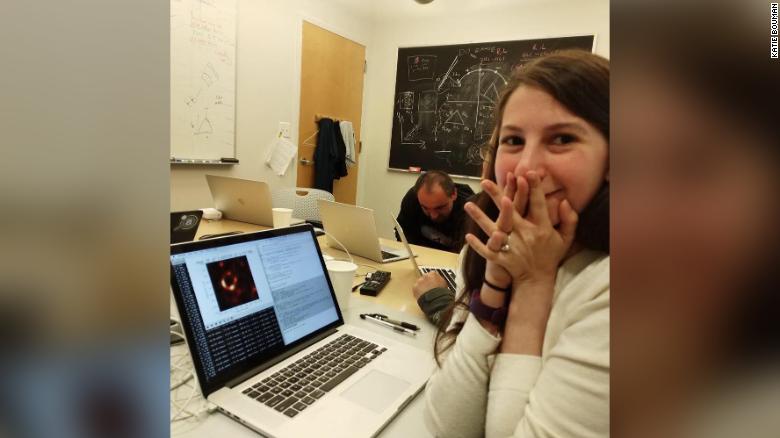
Meet Katie Bouman, the STEM hero behind today’s black hole photo


Astronomers today published the first ever images of a celestial phenomenon we’ve long known to exist, but were unable to capture: a black hole. And it’s thanks, in large part, to the algorithms created by Katie Bouman. Bouman, a graduate student at Harvard, worked with a team of three fellow researchers to create and develop the algorithms that made the image possible. Together, the team utilized enough image data to fill thousands of hard drives, seamlessly stitching together photos from eight telescopes — located in Hawaii, Chile, Mexico, Spain, Arizona, and the Antarctic — to create the image released today.…

This story continues at The Next Web
Sunday, 7 April 2019

Scientists are beefing over which one of our senses is most important


If there is one thing Twitter has taught us, it’s that the world loves a question that sounds stupid, but actually has a profound and interesting answer. For instance, what would happen if the world suddenly turned into blueberries, as answered by physics recently. Or what color is that dress? In a similar way, perception scientists have recently been fighting it out on Twitter to answer the seemingly trivial question of: “which is the best sense, and why?”. The debate has opened up some surprisingly deep questions – like what actually makes a sense more or less valuable? And, are…

This story continues at The Next Web

Saturday, 6 April 2019

Video: Welcome to the wild world of… wood sander racing?


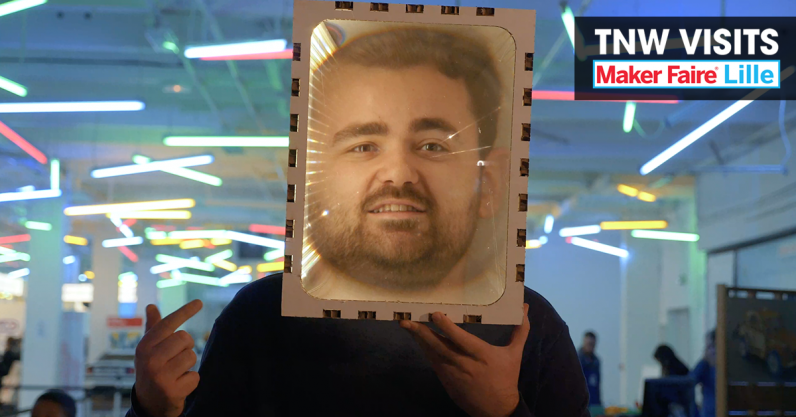
This video is part of our series on Lille’s Maker Faire. To stay up-to-date on releases (and to find out more), check out our master post here. Humanity has raced for millennia. Humans racing humans. Humans racing horses. Humans racing dogs. Humans racing pigeons. Just race on race on race, forever – endlessly testing each other’s speed. But, there’s a certain, magical type of racing previously unexplored. So, welcome one and all to… uh, wood sander racing? It works like this. There’s a wooden track with space for two sanders. These are connected to an extension cord, which is in turn…

This story continues at The Next Web

‘Pay parity has worsened’ – especially for women of color in tech


A persistent gender-based wage gap continues to set women back in tech. While diversity and inclusion has made revolutionary strides in tech for white women, the picture is still dismal for women of color — for every dollar a man makes, a black woman makes 61 cents, while a white woman makes 81 cents. Currently, women make up only nine percent of IT leaders around the world. The figure has barely changed in the past few years despite one third of organizations claiming to have implemented diversity initiatives. But AnitaB.org — an organization that connects, inspires, and strives for greater equality…

This story continues at The Next Web

Researchers developed algorithms that mimic the human brain (and the results don’t suck)


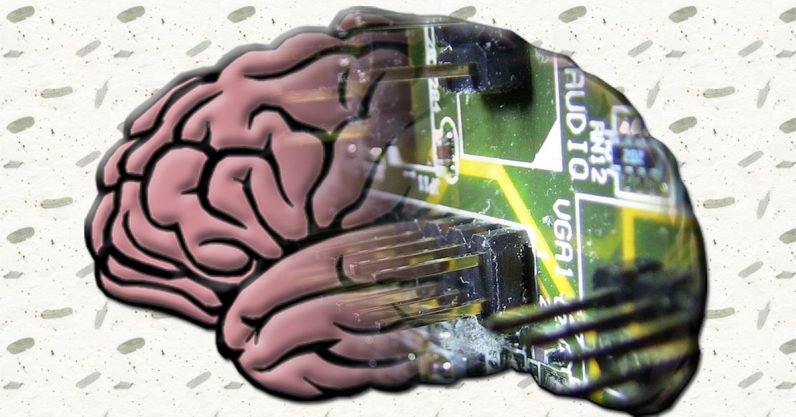
A pair of researchers recently developed a method for successfully conducting unsupervised machine learning that mimics how scientists believe certain aspects of the human brain works. These biologically-feasible algorithms could provide an alternate path forward for the field of AI. IBM researcher Dmitry Krotov and John J. Hopfield, inventor of the associative neural network, developed a set of algorithms that teach machines in the same loose, unfettered way humans learn. Their algorithms allow machines to learn in an unsupervised manner – without using the labelled datasets that modern deep learning does. A lot of ancient AI research – conducted in…

This story continues at The Next Web
Why the world is unhappy with India’s anti-satellite missile test


On March 27, Indian Prime Minister, Narendra Modi, announced that the country had successfully launched an anti-satellite missile in Low Earth Orbit (LEO). With that, India became only the fourth country to test an Anti-Satellite (ASAT) weapon – used to attack enemy satellites or intercepting ballistic missiles – after the US, China, and Russia.   .@DRDO_India successfully launched the Ballistic Missile Defence #BMD Interceptor missile, in an Anti-Satellite #ASAT missile test #MissionShakti engaging an Indian orbiting target satellite in Low Earth Orbit (LEO) in a ‘Hit to Kill’ mode from the Dr. A.P.J. Abdul Kalam Island pic.twitter.com/n5DEWLQpSp — PIB India (@PIB_India) March…

This story continues at The Next Web

‘Consent condom’ requires four hands to open package


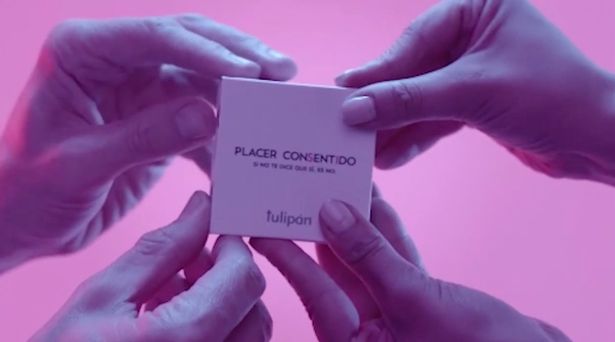
94 percent of women who are raped experience symptoms of post-traumatic stress disorder. One in three will contemplate suicide. And while a condom isn’t going to stop rape, it’s a damn good place to start. Tulipán, an Argentine sex toy retailer, has created the world’s first “consent condom,” a condom encased in packaging requiring four hands to open. The unique design requires two parties to simultaneously press special points on the side of the packet to access its contents. “Tulipán has always spoken of safe pleasure but for this campaign we understood that we had to talk about the most…

This story continues at The Next Web
Studying social animals will unlock the potential of swarm robotics


From flocks of birds to fish schools in the sea, or towering termite mounds, many social groups in nature exist together to survive and thrive. This cooperative behavior can be used by engineers as “bio-inspiration” to solve practical human problems, and by computer scientists studying swarm intelligence. “Swarm robotics” took off in the early 2000s, an early example being the “s-bot” (short for swarm-bot). This is a fully autonomous robot that can perform basic tasks including navigation and the grasping of objects, and which can self-assemble into chains to cross gaps or pull heavy loads. More recently, “TERMES” robots have…

This story continues at The Next Web

The most offbeat and awesome inventions we found at Lille’s Maker Faire


TNW took a trip to the Maker Faire in Lille to find the weirdest and wackiest devices around – and we discovered just that. We’re releasing a new video every couple of days and this is where you can find them all. If you’re unfamiliar with the Maker Faire, it’s a worldwide event where people come to share their inventions. These can be anything from furniture made out of old oil drums, all the way through to DIY drone racing. Basically, it’s a hotbed of creativity. Best of all, we were lucky enough at TNW to go and visit one of…

This story continues at The Next Web
Video: Yep, this long-overdue device lets you play music on exotic fruit


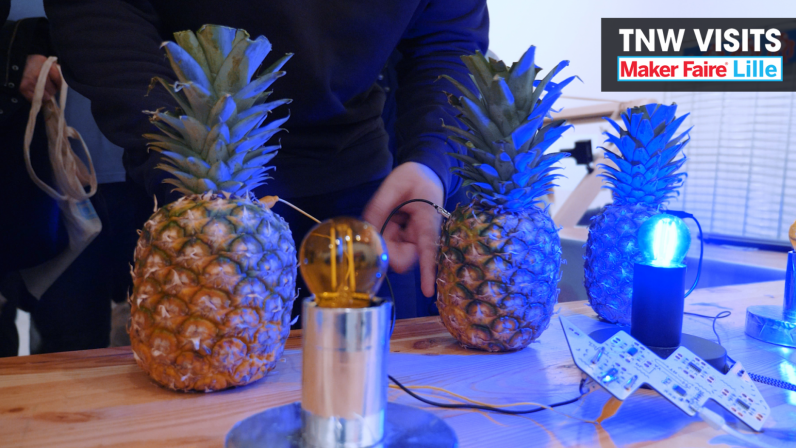
This video is part of our series on Lille’s Maker Faire. To stay up-to-date on releases (and to find out more), check out our master post here. Sometimes an idea is so simple and pure, you’re shocked that no one has done it before. This is not one of those ideas. So, welcome one and all, to the world of musical pineapples. This concept comes from Playtronica, a company that aims to educate people through the use of – as they put it – audio experiences. And, well, it’s cool. But back to the musical pineapples. They work with a…

This story continues at The Next Web
Face-to-face interactions shouldn’t be replaced by digital communication


What with Facetime, Skype, Whatsapp and Snapchat, for many people, face-to-face conversation is used less and less often. These apps allow us to converse with each other quickly and easily – overcoming distances, time zones and countries. We can even talk to virtual assistants such as Alexa, Cortana or Siri – commanding them to play our favorite songs, films, or tell us the weather forecast. Often these ways of communicating reduce the need to speak to another human being. This has led to some of the conversational snippets of our daily lives now taking place mainly via technological devices. So…

This story continues at The Next Web